入门 · HSK 预备中文(普通话)
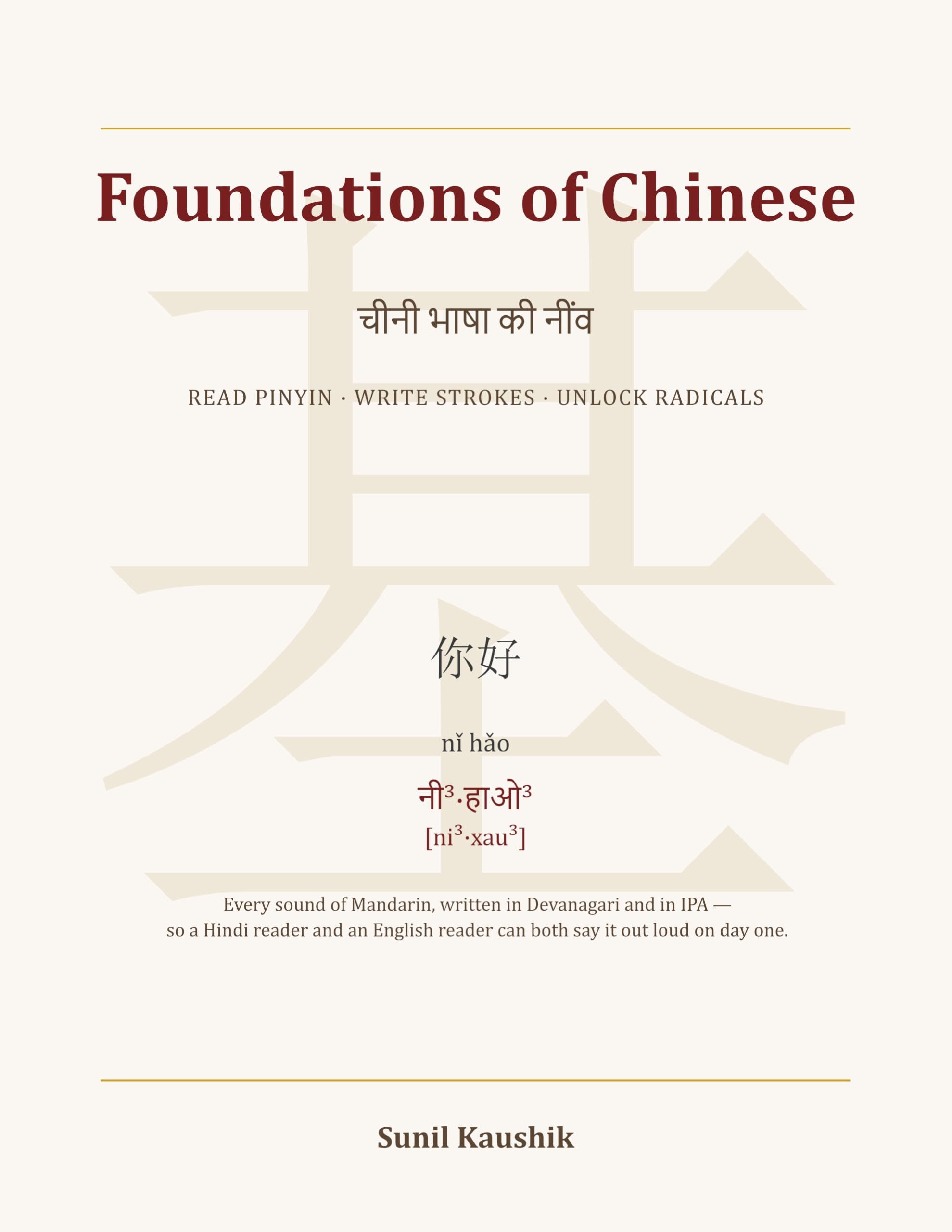
Foundations of Chinese
Read Pinyin, Write Strokes, Unlock Radicals: Mandarin Sounds in Devanagari and IPA, for Hindi and English Readers
“汉语的音很少。汉字由小部件搭建而成。”
一句话介绍
普通话发音、笔画和部首的入门指南,每个词都附拼音、德瓦纳格里文和国际音标:四个声调、完整音节表、笔顺规则,以及帮你打开字典的 64 个部首。
你将获得
- The four tones, the puff pairs, j q x and zh ch sh r — each hard sound with a mouth drawing and a Hindi anchor word.
- The full Mandarin syllable chart (about 400 syllables) on one spread, every one in Devanagari.
- The eight strokes and the seven rules of stroke order, with numbered diagrams and practice grids.
- The 64 radicals that unlock the dictionary, taught in families with stories and drills.
- Answers to every drill, plus a complete pinyin-to-Devanagari reference table.
关于本书
以下完整简介由作者本人以英语撰写。
Chinese sounds are few. Chinese writing is built from small parts. This book gives you both, in the order you need them.
Every word in this book carries a line in Devanagari. Pinyin uses Roman letters, but Roman letters trick a Hindi reader: pinyin c is not “k”, pinyin x is not “ks”. Hindi already has the one thing Chinese needs most, the puff of air in ka and kha, ta and tha, pa and pha, and this book uses it. You can read the sounds out loud on day one.
Part A, The Sounds of Chinese. The four tones and the quiet fifth. The puff pairs. The smiling sounds j q x. The curled tongue of zh ch sh r. Every vowel and every ending. Each hard sound comes with a drawing of the mouth, a Hindi word to anchor it, and a sound-alike from Urdu, French or English. The part ends with the full syllable chart of Mandarin on one spread, about 400 syllables, every one written in Devanagari.
Part B, Hanzi Basics. What a character really is, and the myths about it. The eight strokes and the family of turns and hooks. The seven rules of stroke order, with numbered diagrams and practice grids. How characters are built, and how they carry sound.
Part C, The Radicals. The sixty-four radicals that unlock the dictionary, taught in families with stories, worked examples and drills, and a look-up index by stroke count.
Every drill has its answers. Four appendices hold the complete pinyin-to-Devanagari table, the stroke sheet and the radical chart for lifelong reference.
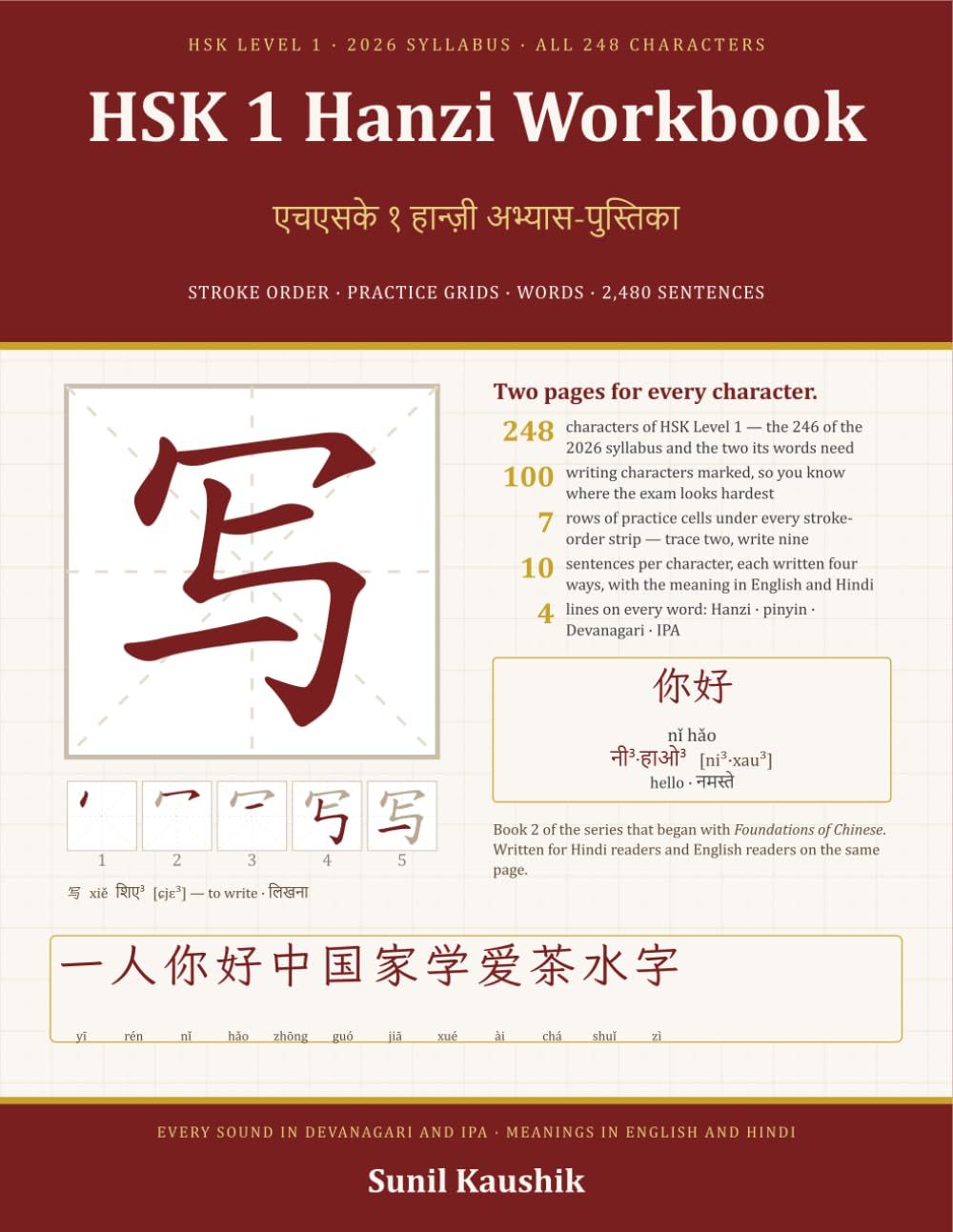
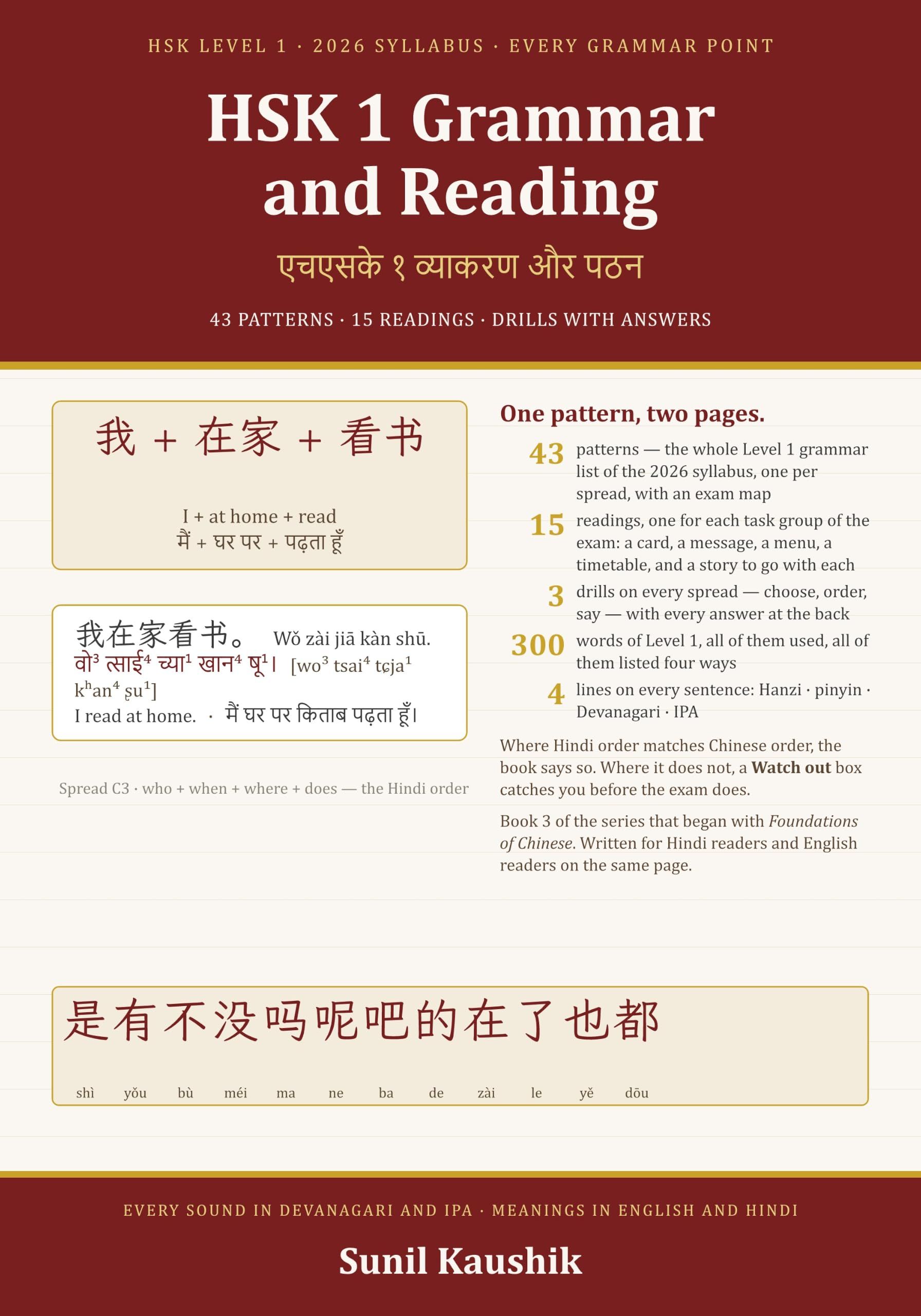
Book 1 of a series that goes on to HSK-level hanzi workbooks and grammar readers, all with the same treatment: hanzi, pinyin, Devanagari and IPA.
适合谁读
普通话零基础学习者、想打好基础的 HSK 学生,以及苦于透过英语拼写去听懂中文的人。
同系列其他书
中文