Débutant · Pré-HSKChinois (mandarin)
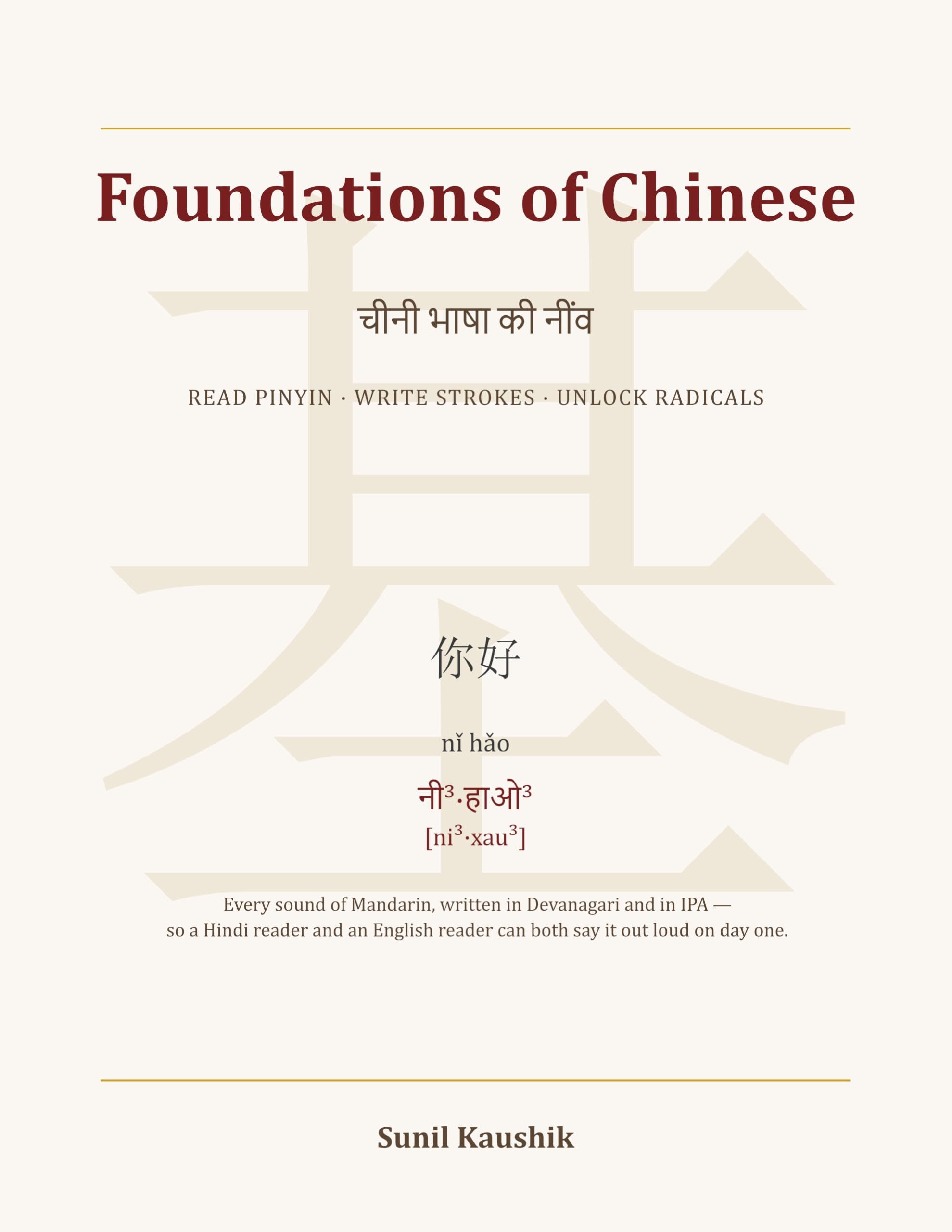
Foundations of Chinese
Read Pinyin, Write Strokes, Unlock Radicals: Mandarin Sounds in Devanagari and IPA, for Hindi and English Readers
“Les sons du chinois sont peu nombreux. L’écriture chinoise se construit à partir de petits éléments.”
En bref
Un guide pour débutants sur les sons, les traits et les clés du mandarin, avec chaque mot en pinyin, devanagari et API : les quatre tons, le tableau complet des syllabes, les règles de l’ordre des traits et les 64 clés qui ouvrent le dictionnaire.
Acheter sur Amazon
Les explications sont en anglais ; chaque mot est aussi donné en devanagari et en API, avec son sens en hindi.
Ce que vous y trouverez
- The four tones, the puff pairs, j q x and zh ch sh r — each hard sound with a mouth drawing and a Hindi anchor word.
- The full Mandarin syllable chart (about 400 syllables) on one spread, every one in Devanagari.
- The eight strokes and the seven rules of stroke order, with numbered diagrams and practice grids.
- The 64 radicals that unlock the dictionary, taught in families with stories and drills.
- Answers to every drill, plus a complete pinyin-to-Devanagari reference table.
À propos de ce livre
La description complète ci-dessous est celle de l’auteur, en anglais.
Chinese sounds are few. Chinese writing is built from small parts. This book gives you both, in the order you need them.
Every word in this book carries a line in Devanagari. Pinyin uses Roman letters, but Roman letters trick a Hindi reader: pinyin c is not “k”, pinyin x is not “ks”. Hindi already has the one thing Chinese needs most, the puff of air in ka and kha, ta and tha, pa and pha, and this book uses it. You can read the sounds out loud on day one.
Part A, The Sounds of Chinese. The four tones and the quiet fifth. The puff pairs. The smiling sounds j q x. The curled tongue of zh ch sh r. Every vowel and every ending. Each hard sound comes with a drawing of the mouth, a Hindi word to anchor it, and a sound-alike from Urdu, French or English. The part ends with the full syllable chart of Mandarin on one spread, about 400 syllables, every one written in Devanagari.
Part B, Hanzi Basics. What a character really is, and the myths about it. The eight strokes and the family of turns and hooks. The seven rules of stroke order, with numbered diagrams and practice grids. How characters are built, and how they carry sound.
Part C, The Radicals. The sixty-four radicals that unlock the dictionary, taught in families with stories, worked examples and drills, and a look-up index by stroke count.
Every drill has its answers. Four appendices hold the complete pinyin-to-Devanagari table, the stroke sheet and the radical chart for lifelong reference.
Book 1 of a series that goes on to HSK-level hanzi workbooks and grammar readers, all with the same treatment: hanzi, pinyin, Devanagari and IPA.
À qui s’adresse ce livre
Grands débutants en mandarin, étudiants du HSK qui veulent des bases solides, et tous ceux qui ont eu du mal à entendre le chinois à travers l’orthographe anglaise.
Dans la même série
Chinois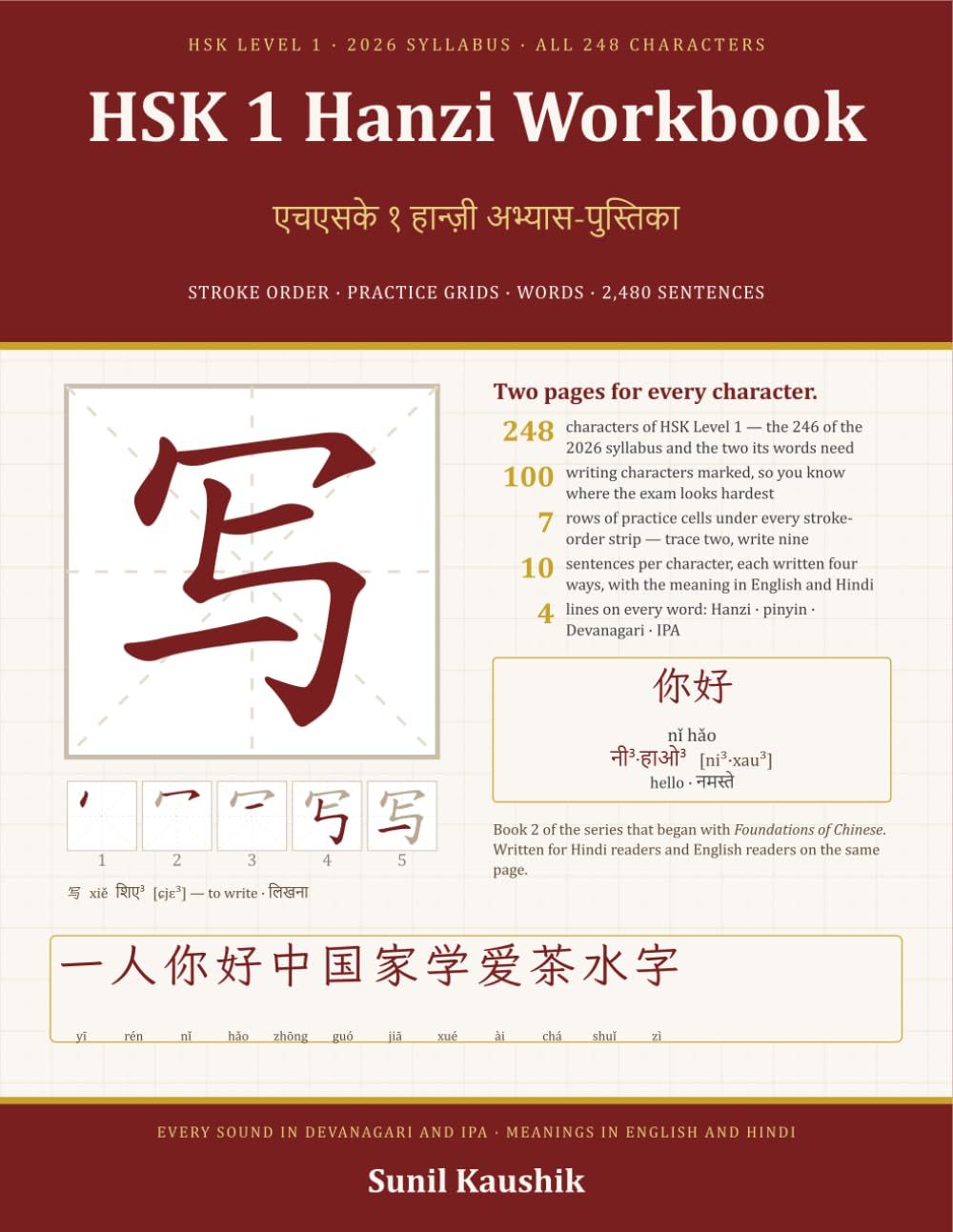
HSK 1
HSK 1 Hanzi Workbook
Deux pages pour chaque caractère du HSK niveau 1. Votre main fait le reste.
Broché
HSK 1
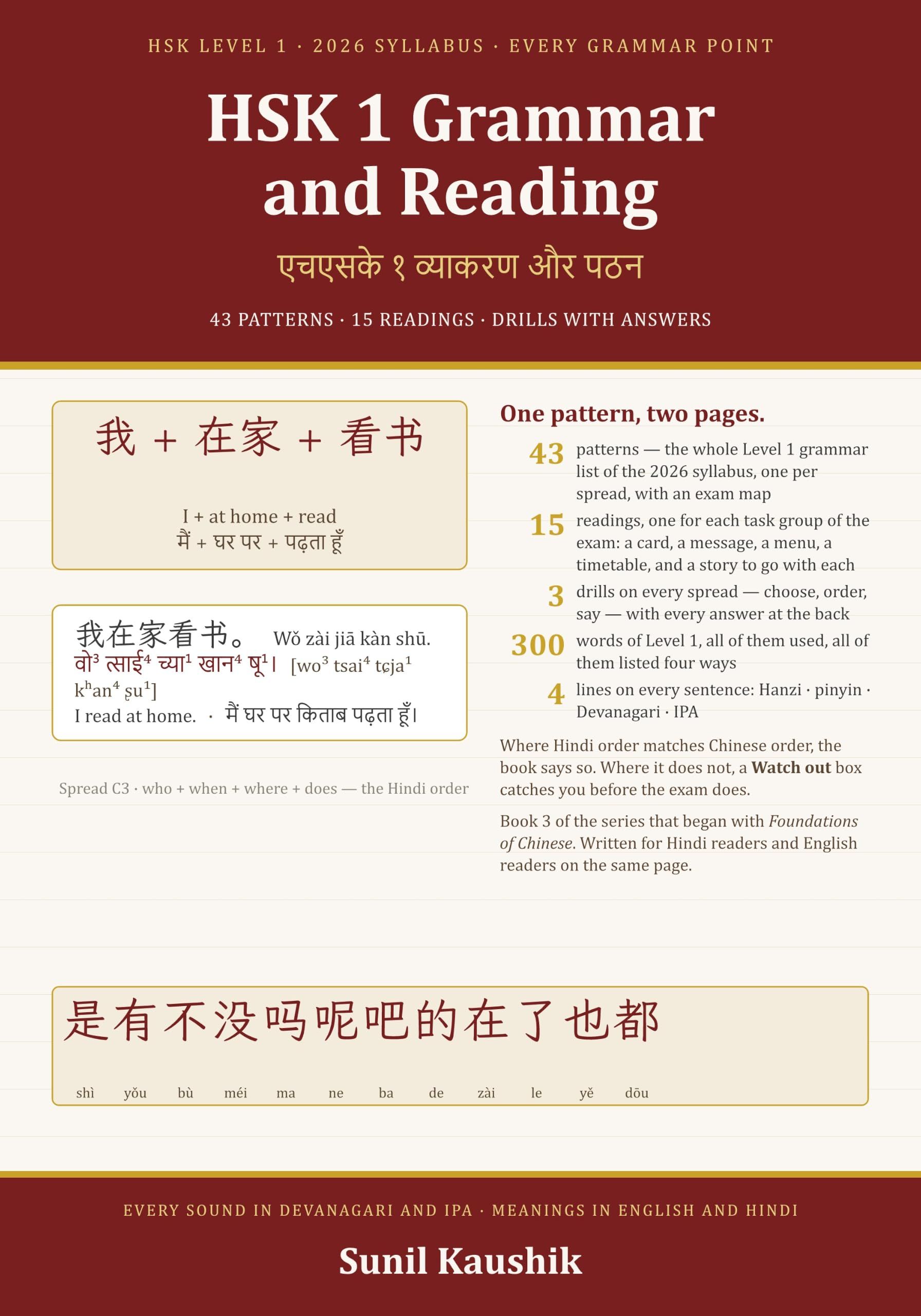
HSK 1 Grammar and Reading
Le chinois a très peu de règles. Les voici toutes pour le HSK niveau 1.
Broché · eBook Kindle